Looks like it is pretty tough to get Excess Rights for Manulife REIT. I applied for 2000 excess, but only received a mere 200.
Anyway, here are the numbers. All prices in USD.
Price before annoucement: 96c
Average Price on Day after (4th Sep): 93c (approximate)
Buying 10000 shares on Day After: 10000 x 0.93 = 9300 USD
Rights Entitled: 4100
Excess Awarded: 200
Total New Units: 4100 + 200 = 4300
Cost per Unit: 69.5c USD
Rights Cost: 2988.50 (ATM fees excluded)
Cost Total: 9300 + 2988.50 = 12,288.50 USD
Average Price on First Day of Trading (26th Oct): 91c (approximate)
# of shares to sell back to 9300 cost: 2988.50 / 0.91 = 3285 ~ 3300 (rounded up to avoid odd lots)
Total Shares left: 10000 + 4300 - 3300 = 11000
Now, the dividend numbers are a little more complicated due to the distribution for the acquisition done in June. Regardless, i will use the previous distribution at face value.
Using latest Dividend numbers
Dividend per unit (DPU): 3.2c
Total Received on 10000 shares: 320 USD
Original yield (annualized): 320 x 2 / 9300 = 6.9%
Diluted Dividend (assuming no increase in income): 3.2 / 1.41 = 2.27c
Total with 11000 shares: 11000 * 2.27c = 249.65 USD
New yield (annualized): 249.65 x 2 / (12,288.50 - (3300 x 0.91)) = 5.4%
Obviously, the income in this case is going to rise as the rights issue was done to acquire another property. Rough calculations gave me a 0.80c contribution by the new property after rights issue.
Adding that in, and doing the last set of calculations.
(2.27 + 0.8) x 2 / (12,288.50 - (3300 x 0.91)) = 7.3%
I am honestly surprised by this result. I checked my 0.8c estimate a couple of times but the only portion that might be overstated is the Rent Free Reimbursements.
If this is the case, i might be trimming down some of my stake. Anyway, i have the yield that i need.
Did i make a mistake in the calculations somewhere?
Friday, October 27, 2017

Tuesday, October 17, 2017
Follow Up on Cache Rights Issue
2 posts ago, i set out to investigate if subscribing for excess rights, and subsequently, maintaining your cost, would result in a maintained or slightly lower yield.
So i had friends who participated and got around double the entitled rights. One had, 1062 entitled, applied 2000 in total, and got full 2000. The other had 1422 entitled applied 7000 in total, and got 2900. So i am assuming that getting 2000 shares in excess is common. This is very bad as data points but i work with what i have.
Here's the maths.
Price before annoucement: 88c
Average Price on Day after (5th Sep): 86.5c (High + Low, divide by 2)
Buying 10000 shares on Day After: 10000 x 0.865 = 8650 SGD
Rights Entitled: 1800
Excess Awarded: 2000
Total New Units: 1800 + 2000 = 3800
Cost per Unit: 63.2c
Rights Cost: 2401.60 (ATM fees excluded)
Cost Total: 8650 + 2401.60 = 11,051.60 SGD
Average Price on First Day of Trading (10th Oct): 84c (High + Low, divide by 2)
# of shares to sell back to 8650 cost: 2401.60 / 0.84 = 2859 ~ 2900 (rounded up to avoid odd lots)
Total Shares left: 10000 + 3800 - 2900 = 10900
Using latest 2Q Dividend numbers
Dividend per unit (DPU): 1.8c
Total Received on 10000 shares: 180 SGD
Original yield (annualized): 180 x 4 / 8650 = 8.3%
Diluted Dividend (assuming no increase in income): 1.8 / 1.18 = 1.525c
Total with 10900 shares: 10900 * 1.525c = 166.22 SGD
New yield (annualized): 166.22 x 4 / (11,051.60 - (2900 x 0.84)) = 7.7%
There you have it. At the same cost, there is a slight decrease in yield. Definitely better than the initial dilution.
Obviously i excluded the cost of the transactions which will impact the numbers a little bit.
Also, the whole price movement cannot be predicted. There are plenty of examples where the price did not recover like it did here between announcement date and trading date. This recovery is broad based because STI went up and even the FTSE ST REIT Index went up.
That aside, you could have gotten Cache at a cheaper price from the 2nd day after the announcement was made. So you might luck out a bit more there as well. Again, this cannot be predicted. And most importantly, the amount of excess cannot be predicted. You may not get much excess for you to make it even worthwhile to consider this move.
Final point, you may see a slightly higher DPU in the coming quarters than the one i calculated as there would be cost savings due to the paying down of debt and that might go in favor of maintaining the yield.
Like all good scientific, data-based studies, here's a conclusion. Maintaining or slightly lower yield is possible. But my personal take is this, there are far too many factors that can screw with you to even make this viable.
So i had friends who participated and got around double the entitled rights. One had, 1062 entitled, applied 2000 in total, and got full 2000. The other had 1422 entitled applied 7000 in total, and got 2900. So i am assuming that getting 2000 shares in excess is common. This is very bad as data points but i work with what i have.
Here's the maths.
Price before annoucement: 88c
Average Price on Day after (5th Sep): 86.5c (High + Low, divide by 2)
Buying 10000 shares on Day After: 10000 x 0.865 = 8650 SGD
Rights Entitled: 1800
Excess Awarded: 2000
Total New Units: 1800 + 2000 = 3800
Cost per Unit: 63.2c
Rights Cost: 2401.60 (ATM fees excluded)
Cost Total: 8650 + 2401.60 = 11,051.60 SGD
Average Price on First Day of Trading (10th Oct): 84c (High + Low, divide by 2)
# of shares to sell back to 8650 cost: 2401.60 / 0.84 = 2859 ~ 2900 (rounded up to avoid odd lots)
Total Shares left: 10000 + 3800 - 2900 = 10900
Using latest 2Q Dividend numbers
Dividend per unit (DPU): 1.8c
Total Received on 10000 shares: 180 SGD
Original yield (annualized): 180 x 4 / 8650 = 8.3%
Diluted Dividend (assuming no increase in income): 1.8 / 1.18 = 1.525c
Total with 10900 shares: 10900 * 1.525c = 166.22 SGD
New yield (annualized): 166.22 x 4 / (11,051.60 - (2900 x 0.84)) = 7.7%
There you have it. At the same cost, there is a slight decrease in yield. Definitely better than the initial dilution.
Obviously i excluded the cost of the transactions which will impact the numbers a little bit.
Also, the whole price movement cannot be predicted. There are plenty of examples where the price did not recover like it did here between announcement date and trading date. This recovery is broad based because STI went up and even the FTSE ST REIT Index went up.
That aside, you could have gotten Cache at a cheaper price from the 2nd day after the announcement was made. So you might luck out a bit more there as well. Again, this cannot be predicted. And most importantly, the amount of excess cannot be predicted. You may not get much excess for you to make it even worthwhile to consider this move.
Final point, you may see a slightly higher DPU in the coming quarters than the one i calculated as there would be cost savings due to the paying down of debt and that might go in favor of maintaining the yield.
Like all good scientific, data-based studies, here's a conclusion. Maintaining or slightly lower yield is possible. But my personal take is this, there are far too many factors that can screw with you to even make this viable.
Wednesday, October 11, 2017
All You Need is a Nudge
One month on from the previous post.
This time my excuse is that shift work has begun for me and it threw my personal schedule a little out of whack. News came out today that Richard Thaler was awarded the Nobel Prize in Economics for his work on Behavioural Economics. I don't think i have read his books but i certainly have read a couple on Behavioural Finance.
http://www.channelnewsasia.com/news/business/commentary-nobel-prize-winner-richard-thaler-changed-economics-9295828
Thaler in his works, argued that people should not be forced to do things with bans or laws. Instead, small interventions, or nudges, that make the right choice easier are the best way to go.
I think this theme is rather similar to the notions delivered in Malcolm Gladwell's Tipping Point. My memory is vague but i recall a story within Tipping Point that talks about how adding a map on to a pamphlet resulted in marked increase in attendees for an event. Here, Thaler thinks that making automatic enrollment into retirement should be the default choice rather than opt-ins and that without help, most people would never retire. This auto-enrollment is also used in our HOTA act.
https://www.bloomberg.com/news/articles/2017-10-10/thank-richard-thaler-for-your-retirement-savings
I fully agree with him on this point. Our version of 401(k) would be CPF. Due to our mental accounting, if we didn't have compulsory contribution in CPF, many people will struggle with retirement.
The rest of that bloomberg article has a couple more gems including auto-escalation - a notion to gradually increase a nudge rather than a forceful change. Another that stood out for me was investing too much into your company's stock is risky. It might come across as confirmation bias where i read only those points that agree with me. But i do appreciate that there could be people who worked for Apple, Amazon or Google. I guess, if you think the company you are working for will become half as big as those 3, you could invest in your company as much as you want.
This is not a post to idol-worship him. In the CNA article, they list 3 areas of work that Thaler did and i am going to throw some suggestions out here to nudge some readers to overcome these behaviours.
Limited Rationality
Nudge yourself to not think in buckets. See money as a tool and where it came from does not matter. A windfall is the same as a salary. Where to use the tool depends on where in your life needs it most.
This tool can be used now or in the future, can be used to buy experiences for immediate pleasure, or pay off debts to ease stress, or even saved for delayed gratification. This might be tough for people who are used to envelope budgeting to do. But budgeting should just be a guide for you to watch your spending and not overdo it. I don't practice envelope budgeting myself, but i do have separate accounts for savings and spending.
Social Preferences
Nudge yourself to not inflate lifestyle when you get a pay raise. You just got a pay raise, and you feel like you could afford to go luxury just a bit more. Not denying a one-off treat here, but who you are is not determined by the kind of lifestyle you lead. You may now be mingling with people who only dine at posh restaurants because they can afford to, but you don't have to forsake the kopitiam just because now you are part of the clique and have a fatter pay check. My expenses has hardly increased since the day i started working. What changed was that my savings rate increased.
Self-Control
This is a tough one. Yet, it says self. Nudge yourself to say no to just one bad temptation or bad choice for a start. Don't pay for that self-control. Exercise what is within you for self-control. It takes a lot of willpower and if you believe that willpower is finite, it's good that you also know that it can be strengthened. I don't believe willpower is finite but going with that train of thought, cut desserts on weekdays and only allow yourself to have a cake on weekends might be a way to strengthen self-control. You don't have to cut it out completely unless you are hugely motivated to lose extra weight.
There you go. Start nudging yourself to make slightly better decisions than you did yesterday. Now, i am off to nudge myself to pen down more of my thoughts on this blog.
This time my excuse is that shift work has begun for me and it threw my personal schedule a little out of whack. News came out today that Richard Thaler was awarded the Nobel Prize in Economics for his work on Behavioural Economics. I don't think i have read his books but i certainly have read a couple on Behavioural Finance.
http://www.channelnewsasia.com/news/business/commentary-nobel-prize-winner-richard-thaler-changed-economics-9295828
Thaler in his works, argued that people should not be forced to do things with bans or laws. Instead, small interventions, or nudges, that make the right choice easier are the best way to go.
I think this theme is rather similar to the notions delivered in Malcolm Gladwell's Tipping Point. My memory is vague but i recall a story within Tipping Point that talks about how adding a map on to a pamphlet resulted in marked increase in attendees for an event. Here, Thaler thinks that making automatic enrollment into retirement should be the default choice rather than opt-ins and that without help, most people would never retire. This auto-enrollment is also used in our HOTA act.
https://www.bloomberg.com/news/articles/2017-10-10/thank-richard-thaler-for-your-retirement-savings
I fully agree with him on this point. Our version of 401(k) would be CPF. Due to our mental accounting, if we didn't have compulsory contribution in CPF, many people will struggle with retirement.
The rest of that bloomberg article has a couple more gems including auto-escalation - a notion to gradually increase a nudge rather than a forceful change. Another that stood out for me was investing too much into your company's stock is risky. It might come across as confirmation bias where i read only those points that agree with me. But i do appreciate that there could be people who worked for Apple, Amazon or Google. I guess, if you think the company you are working for will become half as big as those 3, you could invest in your company as much as you want.
This is not a post to idol-worship him. In the CNA article, they list 3 areas of work that Thaler did and i am going to throw some suggestions out here to nudge some readers to overcome these behaviours.
Limited Rationality
Nudge yourself to not think in buckets. See money as a tool and where it came from does not matter. A windfall is the same as a salary. Where to use the tool depends on where in your life needs it most.
This tool can be used now or in the future, can be used to buy experiences for immediate pleasure, or pay off debts to ease stress, or even saved for delayed gratification. This might be tough for people who are used to envelope budgeting to do. But budgeting should just be a guide for you to watch your spending and not overdo it. I don't practice envelope budgeting myself, but i do have separate accounts for savings and spending.
Social Preferences
Nudge yourself to not inflate lifestyle when you get a pay raise. You just got a pay raise, and you feel like you could afford to go luxury just a bit more. Not denying a one-off treat here, but who you are is not determined by the kind of lifestyle you lead. You may now be mingling with people who only dine at posh restaurants because they can afford to, but you don't have to forsake the kopitiam just because now you are part of the clique and have a fatter pay check. My expenses has hardly increased since the day i started working. What changed was that my savings rate increased.
Self-Control
This is a tough one. Yet, it says self. Nudge yourself to say no to just one bad temptation or bad choice for a start. Don't pay for that self-control. Exercise what is within you for self-control. It takes a lot of willpower and if you believe that willpower is finite, it's good that you also know that it can be strengthened. I don't believe willpower is finite but going with that train of thought, cut desserts on weekdays and only allow yourself to have a cake on weekends might be a way to strengthen self-control. You don't have to cut it out completely unless you are hugely motivated to lose extra weight.
There you go. Start nudging yourself to make slightly better decisions than you did yesterday. Now, i am off to nudge myself to pen down more of my thoughts on this blog.
Friday, September 8, 2017
Emotions and Vulnerability in Trading
Every time i end up on TED Talks consciously or subconsciously, i am reminded of this one TED talk that i watched many years ago.
Youtube: The power of vulnerability | Brené Brown
TED Talk Link - Link
The topic resonated with me so much that i went to buy one of her books on Vulnerability after that.
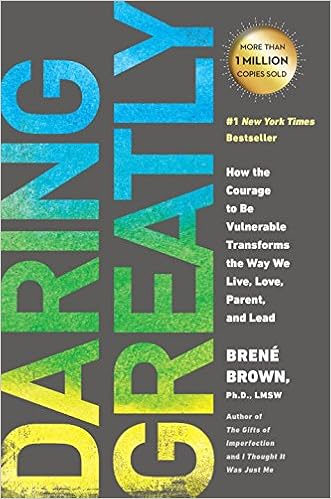 |
| Image from Amazon |
Everyone must have their own stories of feeling unworthy, of feeling shame, of feeling vulnerability.
Should i confess to her my feelings? Is this the right time to do it?
The company did not call back after the interview. Did i do something wrong?
Should i speak to the sweet looking girl at the end of the bar?
And recently, i saw the similarities of that with trading.
Every time you initiate a new position, you are completely at the mercy of the markets. You have rescinded the control over to some thing else other than yourself. No matter what you do, there is no way to direct the action of the markets.
That is Uncertainty.
It is extremely difficult to embrace that. Some people do it well, perhaps, translating their ability to handle vulnerability from other parts of their lives. Some of us don't deal with it so well. We shun it, we don't like uncertainty. We don't like to feel vulnerable.
But that is exactly how it works.
I did attempt to change myself and try to embrace vulnerability in my life. That was way before i started dabbling with the markets. I liked to think that i made progress but i think i am not quite there yet. Clearly in terms of trading, i am nowhere close.
Fears still grip me and then i see the counter i identified ran.
Greed still has a hold on me and i chase after a breakout and get stuck.
The next time it happens again, i am going to read this post again.
I'm going to leave you with two quotes from the video.
On what traits the people who embraced vulnerability had.
"willingness to do something where there is no guarantee"
On how and why we numb ourselves to vulnerability.
"we make everything that is uncertain certain"
Keep Learning
Wednesday, September 6, 2017
Rights Issue - Are they Right for You?
I honestly have been extremely lazy to write any post but work has been a bit hectic recently so that's my lousy excuse. A storm is brewing outside and i am cooped up here so why not pen something down?
There has been a series of Rights issuance this year for Singapore REITs versus 2016. Off the top of my head, i can recall Sabana having one earlier this year; Cache and Manulife just announced almost back-to-back, and of course, we have Ascott who does it almost like celebrating birthdays.
Other more established blogs will cover the whole basics of rights issue. No point talking about it here. But something pertinent popped up in conversations with my peers. Some people think that REITs are useful vehicles to use during retirement.
I disagree and i bold the highlight why i think they're not.
Against my disagreement, dividend from REITs are somewhat predictable, extremely regular and acts as a good inward cashflow for retirees. This much i agree.
Now, what do retirees have to deal with if said REIT does a rights issue like now?
You have to cough up large amount of important cash flow to subscribe if you do not wish to be diluted. Are you going to eat bread and drink plain water for 3 weeks because the money you needed for a lifestyle is now forced to be entered into an equity position?
Don't subscribe.
Fine. But then your dividend per unit drops aka you take back less dividend which then negatively affects your cash flow. How now brown cow? Of course, if this reduced dividend is still sufficient for you to get by, this would not affect you.
There are a multitude of ways to prevent this occurrence for sure. My point is, REITs are not as useful as people think they are. The same people often blindly chase after the high yields they offer. There is a reason why bonds are recommended and used for this purpose.
Not to detract from the good instrument of REITs, if you're in the wealth building stage, they make fantastic cash flow vehicles. I personally have 30odd% of my portfolio in REITs.
Throw in a spanner into the works. What if the rights issue is like the one Manulife is doing? For growth and not like what Cache is doing to improve balance sheets?
There is a possibility that even with the increased number of units, the dividend may be maintained or even grow. This is definitely good and even with the dilution, the cash flow for the retiree may maintain. Even better if you managed to subscribe and maintain the yield payout.
So, obviously i did not like the Cache rights issue. They are doing it now because the unit price is very favourable. When you have high unit price, you could raise more funds even with a steep discount for the exercise price. This is why hardly any REIT did rights issue when prices were low in Feb 2016. Sabana did it at a low probably out of a little bit of desperation.
Essentially, rights issue is just a means of fund raising. It is always cheaper to finance through a bank, ie, take on debt vs asking from the public open market. I am not based in the finance industry so people in the know can correct me on that statement.
But for Cache, this is no longer that feasible. MAS has a ruling that REITs can only leverage up to 45%. At 43.6% there is hardly any room to take on more debt. Plus, should the properties drop in valuations, which is very likely in this climate, the ratio might rise to hit the limit soon. Should that happen, a rights issue at that point in time might be extremely damaging to the value of the REIT.
I see this exercise a preemptive move to prevent that from happening. There might be some form of savings in terms of interest to be paid, but DPU will almost definitely fall on top of the negative rental reversions the sector is already facing.
It's just bad for almost everybody until they can grow again.
As a side note, none of the 3 acquisition that Sabana did the rights issue for went through. The management can say anything they want to market the rights issue so that people throw their cash in to fund the company, but end of the day, deals may still be broken.
So, to finish off this post. I am going to start an experiment. This might have been tested before and if any one could point me towards it, it would be great.
The idea came from a friend who asked if you could subscribe for excess rights, and then later sell out the excess shares you have to lock in the gain so that your position is back to the same value as before. Would that be better than not subscribing?
For example.
Pre-rights. Your cost was 50c.
Rights at 40c and you got a bit of excess rights.
Assuming it is a 50% dilution and 1000 excess is granted.
Original position was $5000. New total cost is $9400.
New cost per unit is 44.8c
If you sold back $4400 worth to return to your original exposure value, you actually have a lowered cost and a little bit of extra shares to sort of maintain your yield.
There's a lot of assumptions about price movements in that example so i shall record the findings using Cache and Manulife and see what we get at the end of both the rights exercise.
Cache
18 for 100
Original Price: 88c
Rights Price: 63.2c
TERP: 84.2c
Manulife
41 for 100
Original Price: 96.5c
Rights Price: 69.5c
TERP: 88.6c
Information above obtained directly from announcements made to SGX
I am vested in Manulife REIT and i have friends in Cache who (i'm hoping) can report back on the status of the excess allotments.
Keep Learning.
There has been a series of Rights issuance this year for Singapore REITs versus 2016. Off the top of my head, i can recall Sabana having one earlier this year; Cache and Manulife just announced almost back-to-back, and of course, we have Ascott who does it almost like celebrating birthdays.
Other more established blogs will cover the whole basics of rights issue. No point talking about it here. But something pertinent popped up in conversations with my peers. Some people think that REITs are useful vehicles to use during retirement.
I disagree and i bold the highlight why i think they're not.
Against my disagreement, dividend from REITs are somewhat predictable, extremely regular and acts as a good inward cashflow for retirees. This much i agree.
Now, what do retirees have to deal with if said REIT does a rights issue like now?
You have to cough up large amount of important cash flow to subscribe if you do not wish to be diluted. Are you going to eat bread and drink plain water for 3 weeks because the money you needed for a lifestyle is now forced to be entered into an equity position?
Don't subscribe.
Fine. But then your dividend per unit drops aka you take back less dividend which then negatively affects your cash flow. How now brown cow? Of course, if this reduced dividend is still sufficient for you to get by, this would not affect you.
There are a multitude of ways to prevent this occurrence for sure. My point is, REITs are not as useful as people think they are. The same people often blindly chase after the high yields they offer. There is a reason why bonds are recommended and used for this purpose.
Not to detract from the good instrument of REITs, if you're in the wealth building stage, they make fantastic cash flow vehicles. I personally have 30odd% of my portfolio in REITs.
Throw in a spanner into the works. What if the rights issue is like the one Manulife is doing? For growth and not like what Cache is doing to improve balance sheets?
There is a possibility that even with the increased number of units, the dividend may be maintained or even grow. This is definitely good and even with the dilution, the cash flow for the retiree may maintain. Even better if you managed to subscribe and maintain the yield payout.
So, obviously i did not like the Cache rights issue. They are doing it now because the unit price is very favourable. When you have high unit price, you could raise more funds even with a steep discount for the exercise price. This is why hardly any REIT did rights issue when prices were low in Feb 2016. Sabana did it at a low probably out of a little bit of desperation.
Essentially, rights issue is just a means of fund raising. It is always cheaper to finance through a bank, ie, take on debt vs asking from the public open market. I am not based in the finance industry so people in the know can correct me on that statement.
 |
| Cache Results Presentation Slide. (link) |
But for Cache, this is no longer that feasible. MAS has a ruling that REITs can only leverage up to 45%. At 43.6% there is hardly any room to take on more debt. Plus, should the properties drop in valuations, which is very likely in this climate, the ratio might rise to hit the limit soon. Should that happen, a rights issue at that point in time might be extremely damaging to the value of the REIT.
I see this exercise a preemptive move to prevent that from happening. There might be some form of savings in terms of interest to be paid, but DPU will almost definitely fall on top of the negative rental reversions the sector is already facing.
It's just bad for almost everybody until they can grow again.
As a side note, none of the 3 acquisition that Sabana did the rights issue for went through. The management can say anything they want to market the rights issue so that people throw their cash in to fund the company, but end of the day, deals may still be broken.
So, to finish off this post. I am going to start an experiment. This might have been tested before and if any one could point me towards it, it would be great.
The idea came from a friend who asked if you could subscribe for excess rights, and then later sell out the excess shares you have to lock in the gain so that your position is back to the same value as before. Would that be better than not subscribing?
For example.
Pre-rights. Your cost was 50c.
Rights at 40c and you got a bit of excess rights.
Assuming it is a 50% dilution and 1000 excess is granted.
Original position was $5000. New total cost is $9400.
New cost per unit is 44.8c
If you sold back $4400 worth to return to your original exposure value, you actually have a lowered cost and a little bit of extra shares to sort of maintain your yield.
There's a lot of assumptions about price movements in that example so i shall record the findings using Cache and Manulife and see what we get at the end of both the rights exercise.
Cache
18 for 100
Original Price: 88c
Rights Price: 63.2c
TERP: 84.2c
Manulife
41 for 100
Original Price: 96.5c
Rights Price: 69.5c
TERP: 88.6c
Information above obtained directly from announcements made to SGX
I am vested in Manulife REIT and i have friends in Cache who (i'm hoping) can report back on the status of the excess allotments.
Keep Learning.
Subscribe to:
Posts (Atom)